
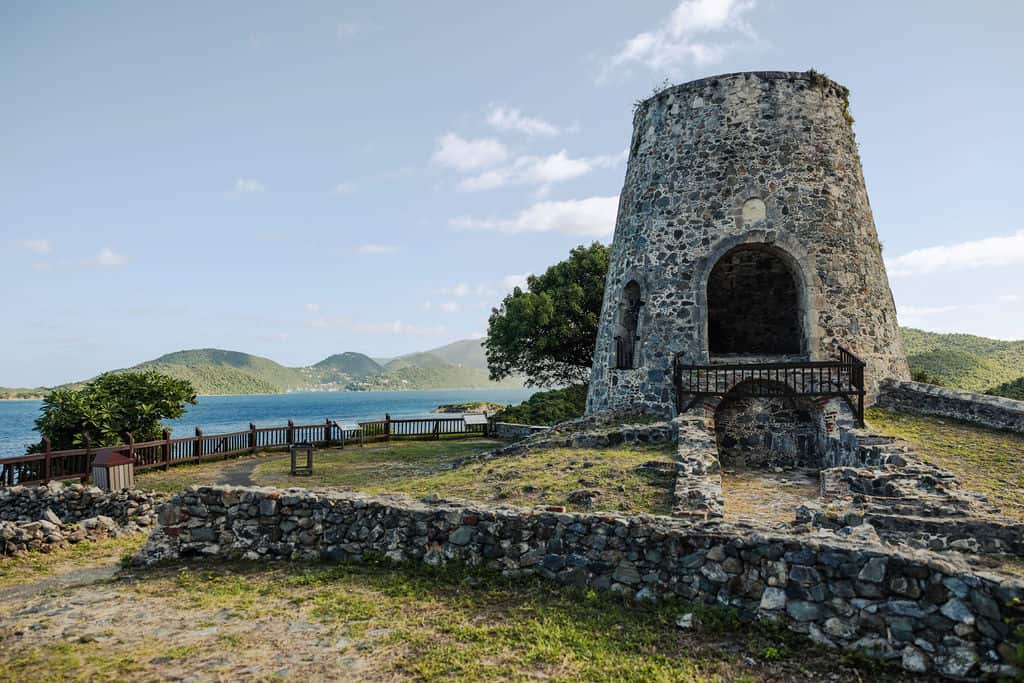
Tour the Annaberg Sugar Plantation
Discover the storied Annaberg Sugar Plantation on St. John and learn about the island’s 1800s sugar plantation era. Wander among the ruins on a self-guided tour, following interpretive signs that give insight into the harsh life on the plantation. Don’t miss the seasonal presentations by local cultural ambassadors that showcase St. John’s rich heritage.
Plantation History
On the North Shore of St. John stands the ruins of the Annaberg Sugar Plantation, one of the largest plantations that operated during the height of sugar production in the U.S. Virgin Islands. Established during Danish colonial rule, the plantation used more than 600 enslaved Africans to do the backbreaking work of harvesting sugarcane, producing 100,000 tons of sugar per year. Conditions were brutal, with workers forced to live on the plantation in homes they had to construct themselves, using mud, coral and palm fronds as building materials.
When slavery was abolished in 1848, the production of sugar declined rapidly. The Annaberg Sugar Plantation ceased operation in the late 1800s, with the site used for cattle farming until the 1930s. It was officially designated part of Virgin Islands National Park in 1956.
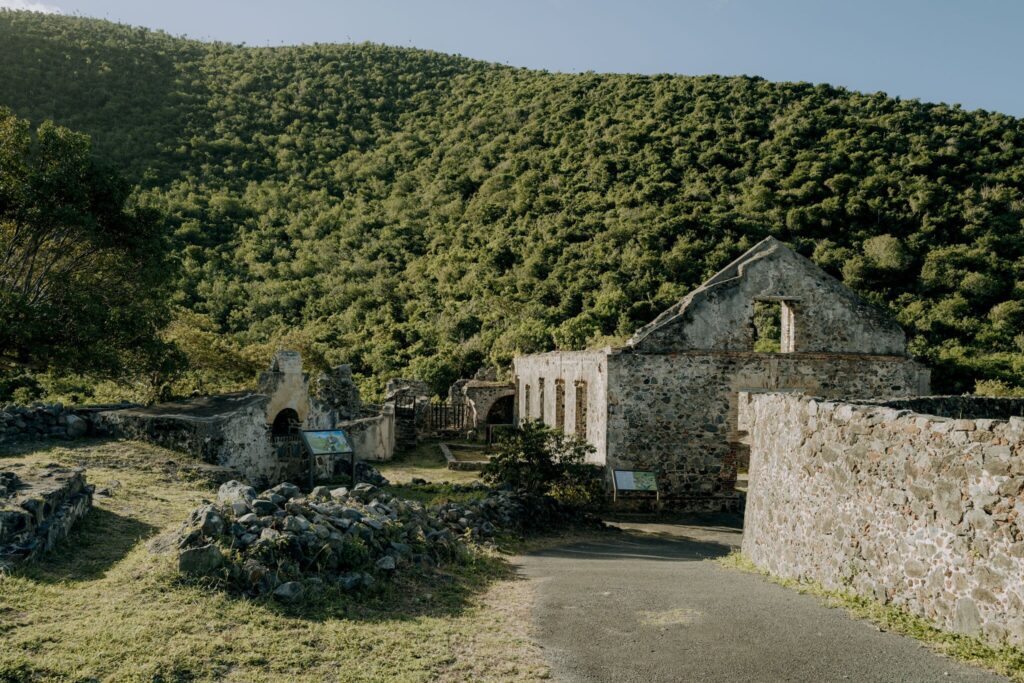
Tour Annaberg Sugar Plantation RUINS
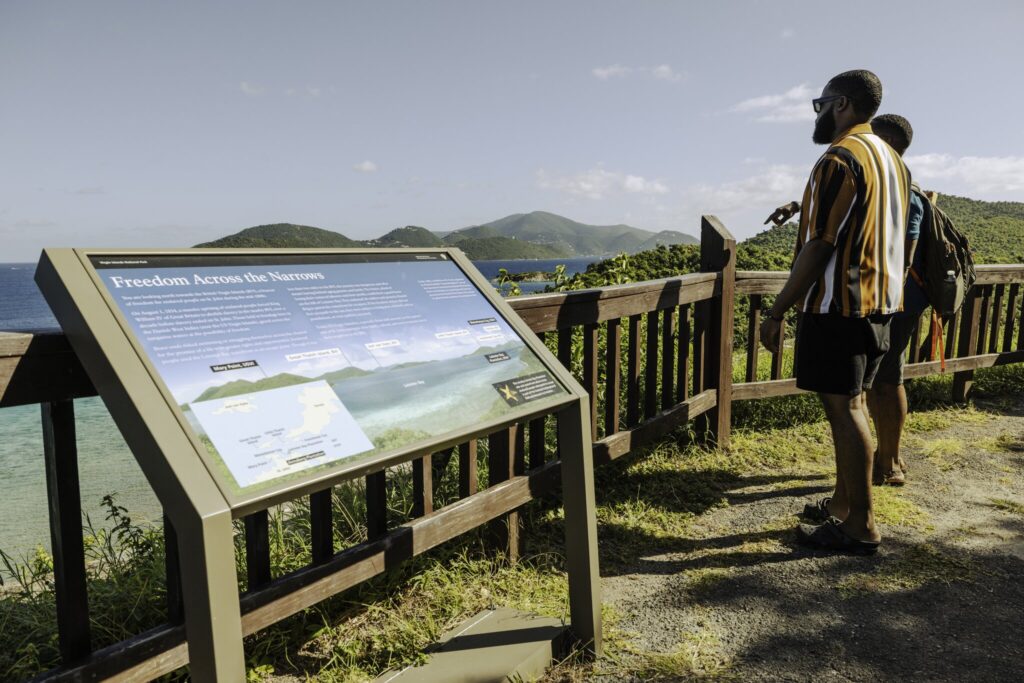
Today, the Annaberg Sugar Plantation is one of the most accessible and best-preserved plantations in the USVI. Managed by the National Park Service, the ruins are free to explore on your own, with interpretive signs leading the way and telling the story of the workers who lived and often perished there.
The trail from the parking lot to the site is rather steep and rocky. But once you reach the site, the path is relatively flat and easy to walk. The view from the Annaberg sugar plantation ruins is spectacular, overlooking the cobalt waters of Leinster Bay and the mountain valleys of St. John.
As you walk among the remains of Annaberg, imagine the now-forested hills behind the factory remnants planted with rows of tall sugarcane. Water had to be hauled to the sugarcane plants by hand. During harvest time, workers spent up to 20 hours a day cutting the sugarcane and loading it onto carts drawn by donkeys that hauled it down to the sugar mill.
You’ll also see the ruins of Annaberg’s stone windmill, which stood 40 feet tall. Wind-powered blades turned the rollers that crushed the sugarcane, with 10 workers processing up to 100 cartloads per day. The sugarcane had to be juiced within 24 hours of harvesting to prevent spoilage.
The thick walls of the boiling room remain standing. It was here that skilled sugar cookers refined raw sugarcane juice into sugar. The process was dangerous and required a steady hand. The juice was boiled in a series of copper kettles, with the resulting syrup transferred to wooden pans where it crystallized into sugar. Some of the actual kettles used are still in place.
In the cookhouse, food was baked in iron pots that were called coal pots (due to the charcoal used as cooking fuel). Herbs for medicine and cooking were gathered from small garden plots (called provision gardens) tended by the workers, who had to grow their own food. Maran bush was used for brooms and baskets were made from hoop vine. Archaeologists have uncovered colonoware on the site, which was the locally made pottery used by the workers for cooking and storage.
A holding cell called “the dungeon,” used to punish rebellious workers, can also be found amid the Annaberg sugar plantation ruins. Rust stains show where shackles were once attached to the walls and some of the inscriptions scrawled by prisoners still exist.
Although only trace evidence is left, there was once more than 16 workers’ quarters on the plantation hillside. In the rubble, archaeologists have uncovered some of the building materials used, revealing the wattle-and-daub construction technique.
Seasonal Cultural Program
Held from November to June, the Annaberg Cultural Program is hosted by Friends of Virgin Islands National Park on the plantation site. From 10 a.m. – 2 p.m., Monday through Wednesday, St. John cultural ambassadors share their rich heritage through demonstrations of skills and crafts that have been passed down through generations.
Olivia Christian demonstrates breadmaking and baking traditions in the plantation’s old cook house. She typically bakes coconut bread, plain dumb bread or johnny cakes. Charles Jackson discusses the Annaberg garden, focusing on sugarcane, bush tea, and the nutritional and medicinal uses of island plants and fruits. Ital Delroy Anthony is a talented musician who also demonstrates arts and crafts.
Explore More USVI Culture & History
USVI national parks & monuments
Experience USVI’s cultural attractions